Intensive phase
Reduce swelling.
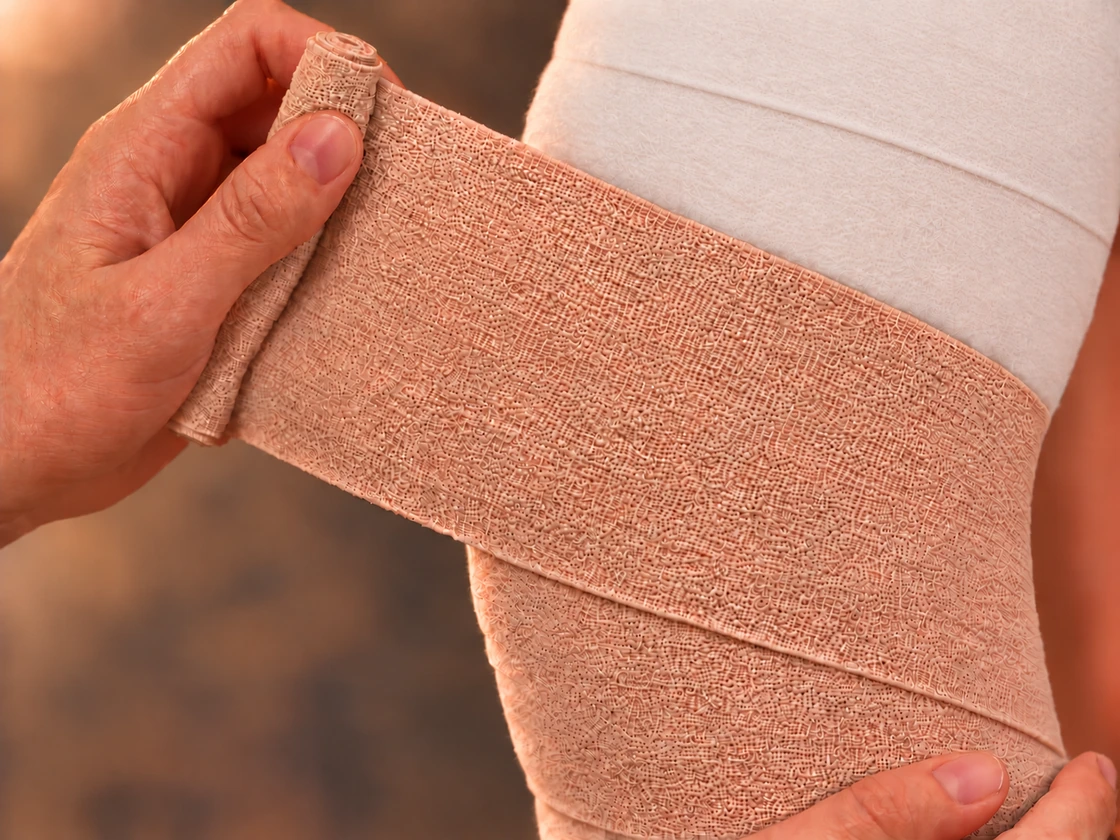
For pronounced or insufficiently controlled swelling, we plan an intensive phase with regular treatment and compression bandaging. Its aim is to reduce volume. Frequency and duration are tailored to your findings.
Lymphological physiotherapy · Zurich
Care for lymphoedema, lipoedema, venous oedema and complex swelling. Manual lymphatic drainage, compression and movement are tailored to your assessment.
Your concern and circumstances shape your treatment. Together, we find an approach that fits you and your daily life.
Is this right for me?
Lymphoedema may be primary or develop after surgery, lymph node removal or radiotherapy. Tissue may become firmer over time. Compression is central; manual lymphatic drainage can complement it but cannot replace it.
Decongestion and maintenance careTypical symptoms include pain, tenderness, tightness or heaviness and a tendency to bruise. Hands and feet are usually unaffected.
Without additional lymphoedema, pain relief, movement and everyday function are the priorities. Compression and, where appropriate, manual lymphatic drainage support symptom management, not fat removal.
Additional lymphoedema requires its own decongestion plan.
Swelling results from impaired venous return. It may increase during the day and initially decrease overnight. Over time, persistent swelling, brown skin discolouration and tissue hardening may develop. Vascular findings guide treatment.
Lymphatic, venous, postoperative or inflammatory factors can overlap. Clinical assessment helps distinguish the contributing causes and guide treatment.
This information provides guidance and does not replace a medical diagnosis.
Your treatment
For chronic lymphoedema, complete decongestive therapy, or CDT, is the central treatment approach. Its foundations are compression, exercise, skin care and practical self-management.
Manual lymphatic drainage complements decongestion where needed. If scars or surrounding connective tissue layers, the fascia, are painful or move less freely, carefully dosed mobilisation, pressure and stretching techniques may be added. These are guided by the assessment and tissue tolerance and combined with movement.
Treatment choices are guided by clinical guidelines, current research and your individual findings. How I interpret the evidence
We discuss your medical history, symptoms and goals. I examine skin, tissue, mobility and function and measure swelling by circumference and volume. Where helpful, photographs document progress, only with your consent.
Intensive phase
For pronounced or insufficiently controlled swelling, we plan an intensive phase with regular treatment and compression bandaging. Its aim is to reduce volume. Frequency and duration are tailored to your findings.
Compression fitting
Once swelling has reduced and the volume is sufficiently stable, an appropriate compression garment is measured and fitted to the decongested limb.
Maintenance phase
You continue the agreed measures in daily life. At follow-up appointments we review swelling, tissue and function, and adapt the plan if your needs change.
Depending on the cause and severity, swelling may be reduced or better controlled, tension and heaviness relieved, and mobility supported. Individually adapted treatment with compression bandaging and appropriate manual techniques may also help hardened tissues become softer and more mobile. For chronic conditions, the focus is often on sustainable oedema management that fits daily life.
I treat you at Therapie Kreuzplatz, Kreuzplatz 16, 8008 Zurich. Find directions and contact details and information on appointments, private fees and payment on the relevant pages.