Therapie Kreuzplatz · Zürich
Physiotherapy
For joints, muscles, fascia and nerves.
Since 2006, I have treated complaints throughout the musculoskeletal system. I bring long-standing experience in manual therapy, myofascial treatment and exercise therapy.
Am I in the right place?
Care for your movement.
Back, neck and spinal complaints
For neck, upper or lower back symptoms, I assess mobility, load tolerance and how joints, muscles and nerves interact. Depending on the findings, I combine targeted Maitland mobilisation with myofascial techniques and suitable exercises.
Joint complaints and restricted movement
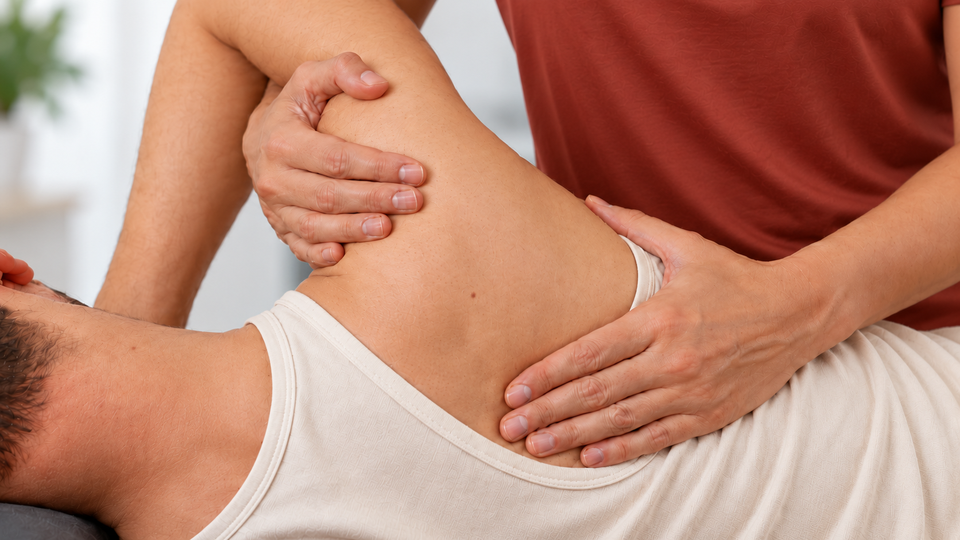
From the shoulder, elbow and hand to the hip, knee and foot, I assess which movements are painful or restricted. Specific Maitland joint mobilisation and active exercises aim to ease movement and build tolerance for everyday activities.
Muscle and fascial complaints
I assess muscles and fascia together. Myofascial pressure, traction and stretching techniques, alongside targeted trigger point treatment, address painful or restricted areas. Individual exercises complement hands-on care.
Nerve-related complaints
For radiating pain, tingling or other nerve-related symptoms, I assess how nerves respond to movement and loading. Where indicated, I use carefully dosed nerve-gliding mobilisation and exercises, adapted to the sensitivity of your symptoms.
Posture, persistent pain and recovery
We consider posture, everyday demands and movement habits in context. After an injury or operation, your stage of recovery and any medical guidance inform the gradual return to activity.
Your treatment
More about your treatment.
The Maitland Concept
Maitland manual therapy combines detailed assessment with targeted treatment techniques for joints, the spine and nerves. I assess which movements change your symptoms and select treatment accordingly.
During joint mobilisation, I use my hands to move a joint in a specific, controlled way. The direction, range and intensity are adapted to your mobility and symptom irritability. The aim is to influence pain and ease movement.
Neurodynamic techniques, also called nerve-gliding mobilisation, address the movement of nerves relative to surrounding tissues. Where indicated, they are carefully dosed and may be complemented by guided exercises. Your response is reassessed regularly; active exercise and advice are part of the treatment approach.
Myofascial treatment, fascia and trigger points
Fascia consists of connective tissue layers that surround and connect structures including muscles. These layers provide support, transmit forces and allow neighbouring tissues to glide.
Myofascial treatment considers muscles and fascia together. Myofascial Release uses slowly applied, sustained pressure with tailored traction and stretching. I adapt the direction and intensity to the tissues and your feedback. The aim is to ease symptoms and movement.
Depending on the findings, techniques from the Typaldos Fascial Distortion Model or treatment of pressure-sensitive muscle points, known as trigger points, may complement the approach. I select these techniques individually and combine them with active exercise and training.
Your individual exercise and training plan
You receive an exercise and training plan for your symptoms and everyday life. My experience in exercise therapy and training in medical exercise therapy and sports physiotherapy inform this plan.
Kinesiology taping where appropriate
Kinesiology taping uses elastic adhesive strips applied to the skin. Their direction and tension are tailored to the assessment, for example to provide movement feedback or complement care for painful or swollen areas.
The tape allows movement and can complement manual treatment and your exercises where appropriate. We assess whether it helps you through your feedback, skin tolerance and response over time.
Looking at the whole person
We also consider work, everyday demands and movement habits. Together, we look at what influences your symptoms and which changes may help.
Manual lymphatic drainage for swelling
For swelling after surgery or injury, manual lymphatic drainage may complement physiotherapy. I use gentle, rhythmic skin movements to treat the affected region and associated drainage pathways. The assessment and stage of healing guide whether compression, movement or self-care exercises are also appropriate.
Your treatment in Zurich
I treat you at Therapie Kreuzplatz, Kreuzplatz 16, 8008 Zurich. Find directions and contact details and information on appointments, private fees and payment on the relevant pages.